
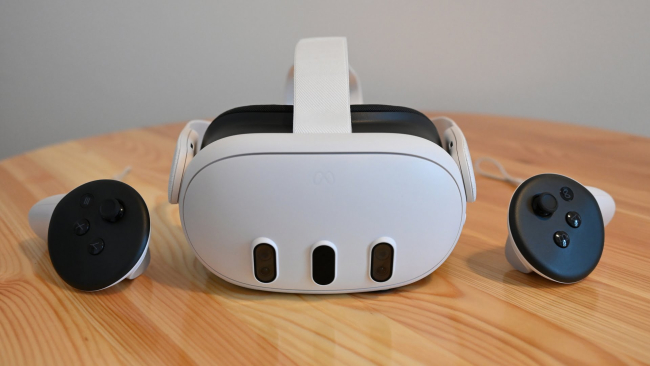
From entertainment to surgical training, virtual reality is being implemented in numerous innovative ways. As virtual reality headsets become more and more advanced, they gain the potential to become an everyday part of our lives. Some, like researchers Slater and Sanchez-Vivez, speculate that VR could become as essential as a smartphone. However, not everyone can experience virtual reality equally. For people with disabilities, the games and experiences aren’t manufactured with their needs in mind, making it difficult to be fully immersed. If this were simply a matter of games, the issue wouldn’t be so pressing, but as we continue to implement virtual reality into social experiences, work settings, and education, we must ensure that the technology is accessible to everyone.
In my personal experience with VR, I enjoy playing games like Wander, in which you can travel to different locations using Google Maps. However, I noticed that even a simple game like Wander is not very user-friendly for people with disabilities. Through Wander, I was able to virtually visit my childhood home, and as I was looking around, it was sentimental to feel like I was walking home from school again. I found the game was best experienced when you can turn around fully, as the 360 immersion gives the effect of really being at that place. But, for wheelchair users who must play the game seated, the places they visit may not feel as real. This brings up one of the greatest barriers to VR: mobility. While someone who can’t do these motions easily can still participate in the game, I would imagine they aren’t going to get the desired effect to the same extent.

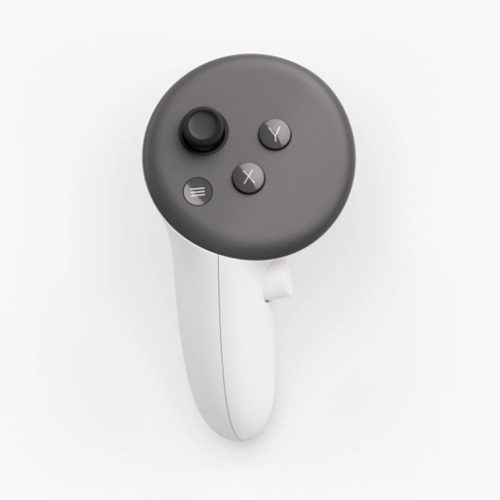
Wander is also an example of many Meta Quest VR games that require the use of controllers to simply maneuver to where you want to go. I had to use the controllers extensively to zoom in and out of the map, dropping my pin in the exact location I wanted. Even as someone who has full mobility of their hands, it was hard to learn and memorize what each button does, and then relearn the different maneuvers every time I went into a new game and retain that muscle memory, all while not being able to see my hands. People who have varying levels of dexterity in their hands due to conditions like rheumatoid arthritis may find the controllers limiting, but there is no other way to interact with the technology. Without the access to the controllers, there is really no access to VR at all. However, there have been some improvements in this realm with hand tracking, rather than controllers. The Meta Ray-Ban Display glasses come with a wrist band that tracks movements of the muscles in your wrist as you move your hands and fingers, but this technology is still very preliminary. This also fails to compensate for someone who may not have hands at all.
People who are deaf or blind have entirely different barriers to VR. Wander and many other games are entirely made up of visual stimuli to transport you to different places, games, and experiences. There used to be no accessibility features in this realm, but Meta now features aids like adjustable font size, contrast settings, and a screen reader, which will read out text and describe images. These can all help low vision users, but for people who are completely blind, they do not aid enough to make experiences comparable to the original. Similarly, while Meta has various aids for deaf people, such as live captions, they still do not enhance the game enough to make it so they can play it with the same amount of ease. But, improvements like in-game interpreters for deaf and hard of hearing people, are in the future.
While strides are being made in the direction of inclusion, it is important to notice that there is a long road ahead to reaching full accessibility of VR to people of all abilities. Suppose there was a technology in which people's brains could directly control their virtual avatar via brain signals. These implants would be highly invasive, and most likely expensive. Although Slater and Sanches-Vives argue that as VR becomes more mainstream, these drawbacks may be worth it, I think that innovators are capable of finding non-invasive ways to make VR accessible. I believe that if developers are able to create a technology that can accomplish the feat of taking users into new realities, just having a stronger intention of inclusivity and accessibility will enable far more advancements in this realm. If VR is to be implemented in spaces like schools and workplaces, and becomes a part of daily life, we have to continue to make progress in improving accessibility at the same rate as we make improvements to the headset itself.
Image Sources
Headline Image
Image 1
Image 2
